The REGISTA
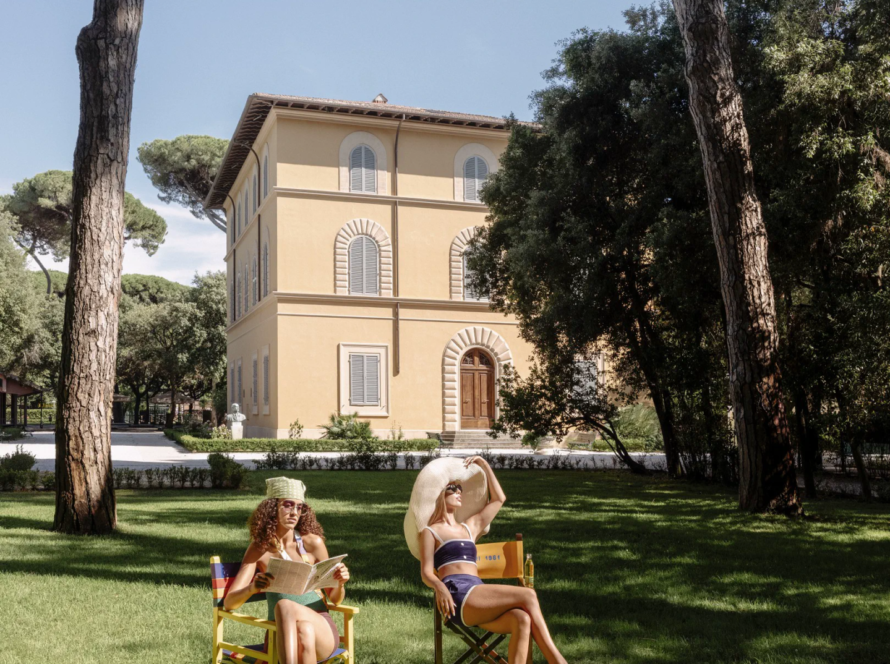
Since 1961, Piastri has crafted the Regista as things meant to last are made. A hand-finished wooden structure, taut canvas, details designed for real use. Essential, solid, foldable: born for the beach, today a symbol.
PIASTRI since 1961.
The REGISTA
Since 1961, Piastri has crafted the Regista as things meant to last are made. A hand-finished wooden structure, taut canvas, details designed for real use. Essential, solid, foldable: born for the beach, today a symbol.
PIASTRI since 1961.
Piastri 1961:
before the name, the profession
The smell of sawdust and paint, a radio that plays softly for company, the sound of wood that changes tone when the blade meets a vein that is harder. It is the year 1961, we are in an old barn converted into a workshop and Luciano Piastri handcrafts furniture and fittings in a time when a31> furniture and fittings in a time that does not hasten and with respect for the material. It is a scene of ordinary everyday life but it is there that will emerge The Director, today symbol of a a51> productive memory and emblem of Italianness.
Chi si avvicina a Piastri 1961 crede di cercare un arredo e poi scopre che in realtà sta cercando altro: un modo di lavorare che non si trova quasi più, un’idea di Made in Italy che non è una semplice firma ma che si traduce in ogni passaggio che porta al prodotto finito.
The Regista
The difference between an ordinary chair and the Piastri Regista lies entirely in the culture that shapes it. Wood is not seen as a simple surface; it is structure, responsibility, a living material. Each species has its own character: a more pronounced grain, a more yielding fiber, a different way of responding to light. The wood is treated without reducing it to a mere aesthetic effect.
The Regista tells the story of Piastri because it embodies this respect; its elegance is not abstract—it lives in the joints, in the geometries. It is the visual proof of something made to last over time: it was born for beaches and coastlines, uncompromising environments where natural elements prevail and temper its fibers.
It is a recognizable piece—understated, functional, and able to belong in the most demanding settings with discretion.
The Regista is the symbol, but not an isolated piece. Around it, Piastri 1961 builds a coordinated universe of wooden elements. Pieces that are not conceived in isolation, but as part of a family that shares the same language: measured proportions, clean lines, and a discreet presence.
What matters is the consistency of vision and method, felt in the comfort, the solidity, and in the way details remain in place even after many seasons.